Example: Static inverse free-boundary equilibrium calculations (in SPARC)
Here we will generate an equilibrium (find coil currents with the inverse solver) in a SPARC-like tokamak.
The machine description comes from files located here.
The equilibrium/profile parameters are completely made up - please experiment on your own and change them to more realistic values as you please!
Import packages
import matplotlib.pyplot as plt
import numpy as np
Create the machine object
# build machine
from freegsnke import build_machine
tokamak = build_machine.tokamak(
    active_coils_path=f"../machine_configs/SPARC/SPARC_active_coils.pickle",
    passive_coils_path=f"../machine_configs/SPARC/SPARC_passive_coils.pickle",
    limiter_path=f"../machine_configs/SPARC/SPARC_limiter.pickle",
    wall_path=f"../machine_configs/SPARC/SPARC_wall.pickle",
)
Active coils --> built from pickle file.
Passive structures --> built from pickle file.
Limiter --> built from pickle file.
Wall --> built from pickle file.
Magnetic probes --> none provided.
Resistance (R) and inductance (M) matrices --> built using actives (and passives if present).
Tokamak built.
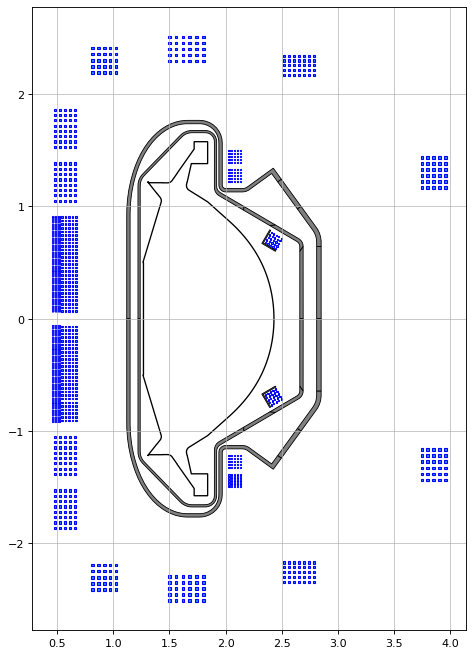
fig1, ax1 = plt.subplots(1, 1, figsize=(7, 15), dpi=80)

ax1.grid(zorder=0, alpha=0.75)
ax1.set_aspect('equal')
tokamak.plot(axis=ax1,show=False)                                                          # plots the active coils and passive structures
ax1.fill(tokamak.wall.R, tokamak.wall.Z, color='k', linewidth=1.2, facecolor='w', zorder=0)   # plots the limiter
[<matplotlib.patches.Polygon at 0x7f93cb3f70d0>]
Instantiate an equilibrium
from freegsnke import equilibrium_update

eq = equilibrium_update.Equilibrium(
    tokamak=tokamak,      # provide tokamak object
    Rmin=1.1, Rmax=2.7,   # radial range
    Zmin=-1.8, Zmax=1.8,  # vertical range
    nx=129,                # number of grid points in the radial direction (needs to be of the form (2**n + 1) with n being an integer)
    ny=129,                # number of grid points in the vertical direction (needs to be of the form (2**n + 1) with n being an integer)
    # psi=plasma_psi
)
Instantiate a profile object
# initialise the profiles
from freegsnke.jtor_update import ConstrainPaxisIp
profiles = ConstrainPaxisIp(
    eq=eq,        # equilibrium object
    paxis=5e4,    # pressure on axis
    Ip=8.7e6,       # plasma current
    fvac=0.5,     # fvac = rB_{tor}
    alpha_m=1.8,  # profile function parameter
    alpha_n=1.2   # profile function parameter
)
Load the static nonlinear solver
from freegsnke import GSstaticsolver
GSStaticSolver = GSstaticsolver.NKGSsolver(eq)
Constraints
Rx = 1.55      # X-point radius
Zx = 1.15      # X-point height

# set desired null_points locations
# this can include X-point and O-point locations
null_points = [[Rx, Rx], [Zx, -Zx]]

Rout = 2.4    # outboard midplane radius
Rin = 1.3    # inboard midplane radius

# set desired isoflux constraints with format
# isoflux_set = [isoflux_0, isoflux_1 ... ]
# with each isoflux_i = [R_coords, Z_coords]
isoflux_set = np.array([[[Rx, Rx, Rout, Rin, 1.7, 1.7], [Zx, -Zx, 0.0, 0.0, 1.5, -1.5]]])

# instantiate the freegsnke constrain object
from freegsnke.inverse import Inverse_optimizer
constrain = Inverse_optimizer(null_points=null_points,
                              isoflux_set=isoflux_set)
The inverse solve
GSStaticSolver.inverse_solve(eq=eq,
                     profiles=profiles,
                     constrain=constrain,
                     target_relative_tolerance=1e-6,
                     target_relative_psit_update=1e-3,
                     verbose=False, # print output
                     l2_reg=np.array([1e-16]*10 + [1e-5]),
                     )
Inverse static solve SUCCESS. Tolerance 3.50e-07 (vs. requested 1e-06) reached in 11/100 iterations.
# refine with a forward solve (now the currents are known)
GSStaticSolver.solve(eq=eq,
                     profiles=profiles,
                     constrain=None,
                     target_relative_tolerance=1e-9,
                     verbose=False, # print output
                     )
Forward static solve SUCCESS. Tolerance 4.07e-10 (vs. requested 1.00e-09) reached in 4/100 iterations.
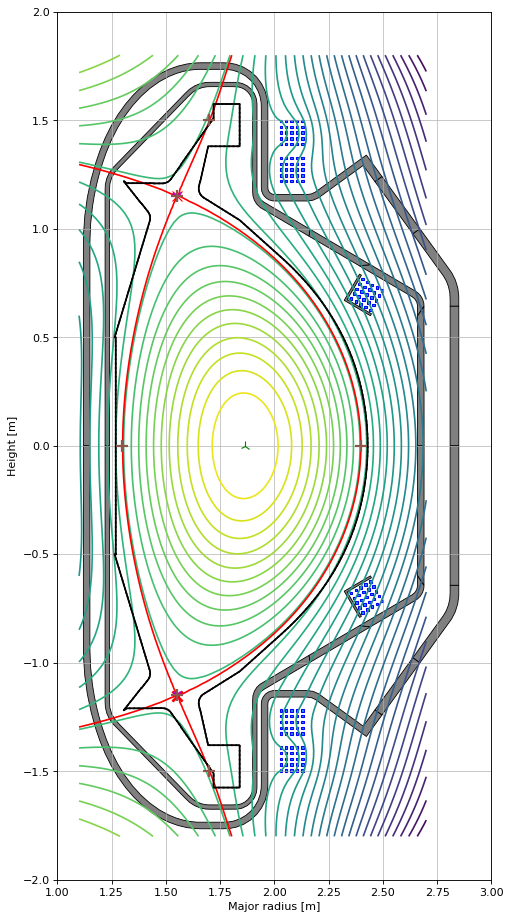
fig1, ax1 = plt.subplots(1, 1, figsize=(7, 15), dpi=80)

ax1.grid(zorder=0, alpha=0.75)
ax1.set_aspect('equal')
eq.tokamak.plot(axis=ax1,show=False)                                                          # plots the active coils and passive structures
ax1.fill(tokamak.wall.R, tokamak.wall.Z, color='k', linewidth=1.2, facecolor='w', zorder=0)   # plots the limiter
eq.plot(axis=ax1,show=False)                                                                  # plots the equilibrium
constrain.plot(axis=ax1, show=False)                                                          # plots the constraints
ax1.set_xlim(1.0, 3.0)
ax1.set_ylim(-2.0, 2.0)
(-2.0, 2.0)
eq.tokamak.getCurrents()
{'CS1I': np.float64(-67731.73439666592),
 'CS1O': np.float64(-61612.86436960609),
 'CS2': np.float64(-162901.2245272561),
 'CS3': np.float64(57983.464984564765),
 'PF1': np.float64(100441.22999836717),
 'PF2': np.float64(88279.88153903028),
 'PF3': np.float64(-97548.23462645893),
 'PF4': np.float64(-140162.171534197),
 'DV1': np.float64(19989.7280201101),
 'DV2': np.float64(-8230.808155095157),
 'VS1': np.float64(0.004742506305754815),
 'vacuum_vessel_0': np.float64(0.0),
 'vacuum_vessel_1': np.float64(0.0),
 'vacuum_vessel_2': np.float64(0.0),
 'vacuum_vessel_3': np.float64(0.0),
 'vacuum_vessel_4': np.float64(0.0),
 'vacuum_vessel_5': np.float64(0.0),
 'vacuum_vessel_6': np.float64(0.0),
 'vacuum_vessel_7': np.float64(0.0),
 'vacuum_vessel_8': np.float64(0.0),
 'vacuum_vessel_9': np.float64(0.0),
 'vacuum_vessel_10': np.float64(0.0),
 'vacuum_vessel_11': np.float64(0.0),
 'vacuum_vessel_12': np.float64(0.0),
 'vacuum_vessel_13': np.float64(0.0),
 'vacuum_vessel_14': np.float64(0.0),
 'vacuum_vessel_15': np.float64(0.0),
 'VSC_coil_cover0': np.float64(0.0),
 'VSC_coil_cover1': np.float64(0.0)}